5 Ultimate Crypto Picks for 2025: Is Ripple XRP the Best Crypto Coin to Buy?
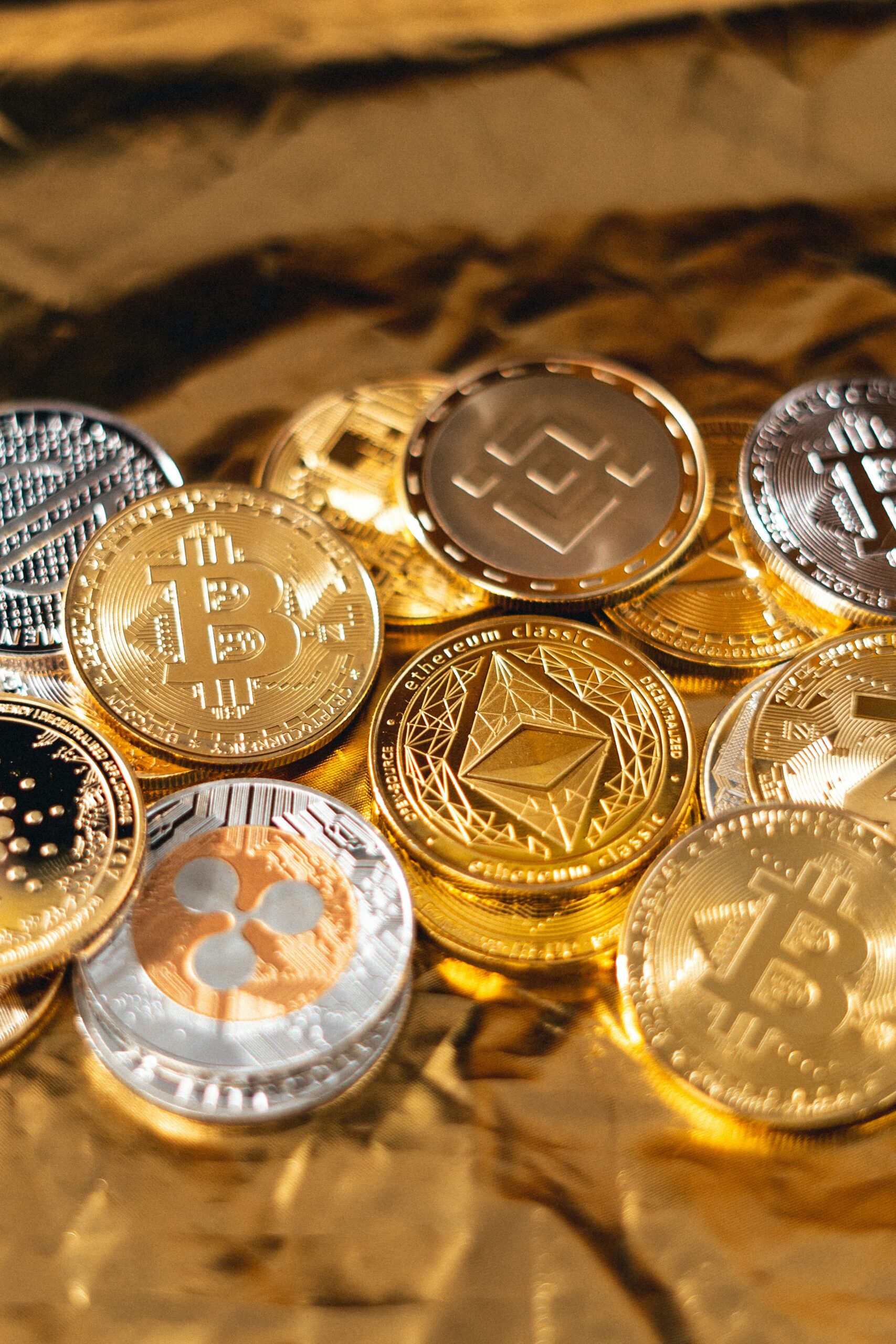
Investors and crypto enthusiasts are asking: which is the best crypto coin to buy? The answer depends on many factors. In this in-depth guide, we break down the top 5 cryptocurrencies (Bitcoin, Ethereum, Ripple XRP, Cardano, Solana), examining their technology, pros and cons, and price predictions for 2025 and 2030.
We’ll identify gaps in existing analyses – such as neglect of regulatory risks or overly optimistic forecasts – and fill them with balanced insight. By the end, you’ll see how Ripple XRP stacks up against crypto giants and challengers, and whether it truly deserves the label “best crypto coin to buy.”
What Makes a Crypto a “Best Crypto Coin to Buy”?
Before diving into specific coins, consider these key criteria for choosing a crypto investment:
- Adoption & Utility: Leading cryptos like Bitcoin and Ethereum have strong networks and real-world use cases (e.g. as a store-of-value or smart contract platform). A coin’s utility in finance or tech can drive demand.
- Technology & Speed: Innovations (like Ethereum’s smart contracts or Solana’s high throughput) matter. For instance, Solana’s unique Proof-of-History/Proof-of-Stake allows 65,000+ transactions per second, far surpassing older chains.
- Supply Mechanics: Scarcity (Bitcoin’s 21M cap) or emission rate influence price. Bitcoin’s halving cycle (every ~4 years) historically boosts its value due to lower new supply.
- Team & Governance: A credible team or transparent governance (Cardano’s peer-review approach, for example) can instill investor confidence. Conversely, centralized control (Ripple Labs’ influence over XRP) or protracted development can be red flags.
- Regulatory Clarity: Cryptos face legal scrutiny; recent XRP litigation with the SEC showed that legal risk can cause volatility. Coins with clearer compliance (ETH now PoS) may be “safer” choices.
A balanced, long-term view often wins out. While high-flying memes or newly hyped tokens can skyrocket briefly, our list focuses on coins with proven fundamentals and realistic growth potential. We’ve scoured top analyses and found that many sources overlook crypto cons (like environmental costs, network outages, regulatory hurdles) and extreme price variance. We’ll cover both the upside and the downside for each coin.
1. Bitcoin (BTC) – Digital Gold and the Safe Haven
Overview: Bitcoin is the original cryptocurrency and remains the largest by market cap. It’s often called “digital gold” because of its fixed supply (21 million BTC) and decentralized nature. It’s widely accepted (used by institutions and even governments) as a store of value. Many investors view BTC as protection against inflation or economic turmoil and many consider it the best crypto coin to buy.
Pros:
- First-mover advantage & liquidity: Bitcoin has the broadest adoption and deepest markets. It dominates trading volume, making it easy to buy/sell at scale.
- Store-of-value narrative: With its capped supply, Bitcoin is compared to gold. Market analysts note that as governments expand money printing, Bitcoin’s finite supply makes it attractive. One expert suggests all available capital in money markets (~$7T) could flow into BTC eventually.
- Halving & scarcity: Bitcoin’s mining reward halves roughly every four years. This periodic “shock” has historically presaged big bull runs. The next halving (mid-2024) sets up potential price surges into 2025.
- Growing institutional adoption: Big players (e.g. BlackRock, Fidelity) have launched or plan Bitcoin ETFs, making it easier for investors to buy BTC. Reports show institutional inflows (such as spot ETF inflows) are reinforcing bullish forecasts.
Cons:
- Volatility: Despite its “safe haven” image, BTC is still extremely volatile. Prices can swing tens of percent in days (as seen in 2022-2024).
- Slow & expensive transactions: Bitcoin’s 7 TPS (transactions per second) limits its use in daily payments. For merchant payments or DeFi, it’s less practical than faster blockchains.
- Environmental concerns: Bitcoin’s Proof-of-Work mining uses much energy. This has raised criticism and regulatory attention in some countries (though some miners are shifting to renewables).
- Regulatory uncertainty: While Bitcoin is mostly recognized, certain regions may impose restrictions or taxes, which could dampen demand.
Price Outlook: Analysts’ 2025 targets for BTC vary widely. Recent forecasts have become exceptionally bullish thanks to ETF demand and liquidity expectations. As of mid-2025, experts at VanEck, Fundstrat and others predict a Bitcoin price top of $180K–$250K by end of 2025, reflecting strong institutional adoption. For example, Tom Lee of Fundstrat believes BTC could gain 40%+ to at least $150K in 2025. Even a moderate target, Bitfinex analysts say BTC “could touch $115,000” by early July 2025 under bullish conditions.
Looking further ahead, forecasts vary wildly. A Changelly analysis estimates an average Bitcoin price of ~$915,000 by 2030 (with a possible range up to $1,009,394). On the extremely optimistic side, some visionaries cite $1 million by 2030 or even $2.4–$5 million (in line with Cathie Wood’s wide range). Of course, these hinge on macro trends: if fiat currencies lose value or demand for scarce assets explodes, Bitcoin could skyrocket. On the other hand, if a major bear market hits around 2026, Bitcoin could retreat before the next cycle.
Bitcoin price: In practical terms, BTC is trading above $100K in 2025. Analysts anticipate it may stay above roughly $108,000 in mid-2025. The key takeaway: Bitcoin likely remains a core holding for many, with potential for big gains if bullish predictions pan out – but be prepared for steep drops too.
2. Ethereum (ETH) – Smart-Contract Powerhouse
Overview: Ethereum is the leading smart-contract platform, second only to Bitcoin in market size. It enables decentralized apps (dApps), DeFi protocols, and NFTs. Unlike Bitcoin, Ethereum’s purpose is “programmable money.” After transitioning to Proof-of-Stake (Ethereum 2.0 in 2022), ETH’s network now consumes ~99% less energy and even burns some ETH via transaction fees (EIP-1559), potentially making ETH deflationary over time. Ethereum’s ecosystem is a cornerstone of blockchain innovation and because of its real world use case it is often thought of as the best crypto coin to buy.
Pros:
- DeFi and NFT leader: Most decentralized finance activity (lending, trading) runs on Ethereum. It also kick-started the NFT craze. This entrenched ecosystem makes ETH highly valuable – demand for ETH is tied to network usage.
- Large developer community: Ethereum has the most active developers and projects. This innovation edge means new features (e.g. sharding, the “Surge” upgrades) are continually added to improve scalability.
- Upgrades improving value: The move to PoS reduced issuance and energy use. Future updates (like “Danksharding”) aim to massively increase throughput. These tech upgrades could underpin long-term growth.
- Institutional interest: Big financial players (e.g. Goldman Sachs analysts) expect ETH to outperform BTC in the long run, given its broader use cases. The approval of spot ETH ETFs (pending in many jurisdictions) could unlock new capital.
Cons:
- Scaling challenges: Until the latest upgrades, Ethereum suffered from high gas fees and network congestion. Although Layer-2 solutions (Arbitrum, Optimism) help, Ethereum still faces pressure from faster chains (Solana, Avalanche) for developers.
- Competition: Many blockchains are chasing Ethereum’s crown in DeFi. If Ethereum’s sharding/PoS path falters, rivals with lower fees might capture market share.
- Regulatory questions: Some experts debate whether ETH is a security (especially pre-PoS). Future legal rulings could affect Ether’s classification or exchange status.
Price Outlook: Long-term ETH price predictions span from conservative to extremely optimistic. As of June 2025, ETH hovers around $2,600. A Binance consensus forecast (user-driven) pegs it near $2,453 by mid-2025. More bullish analyses see much higher levels: for instance, one crypto research site projects ETH ~$4,200 by 2025 and ~$10,000 by 2030. Even more dramatic, investment firm VanEck estimates $22,000 by 2030 under its base-case scenario, premised on Ethereum capturing big chunks of the financial and AI markets. (VanEck’s bull case for the Ethereum price is even $154,000 by 2030, while their bear case is just $360, illustrating the wide range of outcomes.)
To be realistic, many analysts see ETH reaching a few thousand by mid-decade. The exact 2025 target depends on adoption of upgrades and overall crypto markets. Key point: Ethereum’s massive ecosystem gives it staying power. If DeFi/NFT activity surges, ETH could outperform most altcoins. On the flip side, if the network upgrade roadmap stalls or new regulation hits, growth could slow.
3. Ripple XRP – Banking’s Ally or Hype Asset?
Overview: Ripple XRP is designed for fast, low-cost cross-border payments. Unlike Bitcoin’s mining, XRP transactions settle in seconds with very low fees (often a fraction of a cent). Ripple Labs, the company behind it, focuses on partnering with banks and financial institutions to replace outdated systems like SWIFT. XRP’s network can handle thousands of transactions per second – far more than Bitcoin or Ethereum – which makes it attractive for global remittances and a top contender for the best crypto coin to buy.
Pros:
- Ultra-fast & cheap transfers: XRP’s tech is tailored for financial transfers. As one analysis notes, XRP was “engineered for global finance” thanks to its swift transaction capabilities and operational efficiency.
- Real-world partnerships: Major banks (Santander, SBI Holdings, American Express, etc.) have tested or used XRP-backed rails. These ties demonstrate real adoption, beyond mere speculation. For example, Ripple claims $75M of transactions flowed through XRP for Santander’s international transfers.
- Huge liquidity & market cap: XRP is consistently among the top cryptos by market cap. Deep order books and high trading volume mean investors can enter/exit positions easily.
Cons:
- Regulatory overhang: The SEC’s lawsuit against Ripple (mainly about whether XRP was an unregistered security) loomed large in 2023. (Ripples won a partial victory in Dec 2023 – the judge ruled XRP on public exchanges wasn’t a security – which gave price a big boost). But any further legal appeals or new rules could again affect XRP’s status and market confidence.
- Centralization concerns: Ripple Labs owns a significant portion of XRP supply and controls the validator network. Critics argue this makes XRP less decentralized. Investors should watch if Ripple sells large amounts (they’ve planned monthly sales to fund operations). Too much selling can pressure prices.
- Competition: Newer tech could challenge XRP’s niche. For example, stablecoins (USDC, USDT) on blockchains can also move value fast, and central bank digital currencies (CBDCs) might emerge. If global finance shifts to something else, XRP may see lower demand.
Price Outlook: XRP has ranged between ~$0.60 and $0.80 in early 2025. Forecasts for 2025 are mixed but generally bullish given Ripple’s progress. Benzinga reports analysts envision XRP between about $2.05 and $5.81 by end of 2025. That wide spread (2x to 9x the current price) reflects uncertainty. On one hand, “average projection” is $3.90 — roughly six times today’s level — if global payments adoption picks up. On the other hand, bearish scenarios (like the outset of 2024) had XRP much lower.
Looking to 2030, one set of crypto analysts suggests XRP might be $4.67–$26.97. That implies a huge upside (up to 40x) in the best case, though the average is just $5.00 (8x). These lofty numbers assume XRP breaks into mainstream finance. Realistically, XRP’s price will hinge on settlement volume: more banks using it means more demand. If Ripple’s On-Demand Liquidity (ODL) network grows, XRP could hit the high-end forecasts. If not, it could languish in single digits.
XRP Price, in any case, has been recovering with crypto sentiment. After its 2023 lows around $0.30, 2025 has seen it steadily climb (recently ~ $0.60–$0.70). The upcoming settling of SEC issues and any big bank partnerships could push it higher. But keep in mind: XRP is widely considered speculative until it proves utility. Investors should weigh its potential against the regulatory risks.
4. Cardano (ADA) – The Scientific Layer-1
Overview: Cardano markets itself as a “third-generation” blockchain, emphasizing peer-reviewed research and formal verification. Co-founded by Ethereum’s Charles Hoskinson, Cardano’s mission is to be more scalable, sustainable, and secure. It uses Proof-of-Stake (Ouroboros consensus) to be energy-efficient, and boasts a theoretical supply cap of 45 billion ADA. Over time, Cardano has rolled out features (smart contracts via Plutus, sidechains, etc.) in phases, though critics say its progress is slower than competitors.
Pros:
- Academic rigor & sustainability: Cardano’s development is guided by formal methods and research. Benzinga notes its “scientific approach, formal peer reviews and strong emphasis on security”. Its PoS mechanism consumes minimal power, which appeals in a world concerned about crypto energy use.
- Decentralization & scalability: By design, Cardano aims to decentralize more than other big chains. Its Hydra layer-2 aims to unlock massive scalability (potentially 1 million TPS). If deployed well, this could solve blockchain bloat issues.
- Real-world focus: Cardano has sought real use cases (like in Ethiopia’s ID system and supply chains). Such projects, if successful, can drive demand for ADA. The ecosystem is growing (though from a smaller base than ETH/SOL).
Cons:
- Slow development: The same methodical approach means Cardano lags behind in features. For example, only in 2021 did it add smart contracts, years after Ethereum. Many in DeFi/NFT space moved on to more agile platforms (Solana, Avalanche). Benzinga cautions that “its phased release strategy… has often lagged behind competitors”, resulting in fewer dApps currently.
- Lower adoption so far: Cardano’s dApp ecosystem is much smaller than Ethereum’s. Until more projects launch on ADA, its network effects remain limited. Some investors worry ADA won’t attract the same developer community.
- Competition: Many blockchains compete on the same front (e.g. Ethereum Layer-2s, or other eco-friendly PoS chains). If Cardano can’t stand out with unique apps or partnerships, it could be overshadowed.
Price Outlook: Cardano’s price (ADA) has been relatively flat near $0.55 in 2025. Forecasts range widely: Benzinga’s analysis suggests an average of ~$0.945 by 2025 (about 70% above late-2024 levels), with optimistic peaks at $1.38. For 2030, Benzinga’s scenario is cautious: an average around $0.341 (implying ADA could even decline from its highs). This reflects concerns that Cardano’s growth has been slower than hoped.
By contrast, some bullish forecasts paint a radically different picture: one crypto analysis posits $15–$20 by 2030, assuming Cardano nails widespread adoption and upgrades. Another source sees $3.33. The truth likely lies between. Given Cardano’s historical range ($0.02 at launch to ~$3.10 ATH in 2021), a multi-dollar future isn’t impossible – but reaching teens or higher would require a blockbuster adoption story. For now, ADA remains a high-risk bet: its upside in 2025–2030 depends on delivering promised tech (Hydra, Mithril) and attracting DeFi/NFT projects.
“Cardano Price” thus faces uncertainty. If Cardano fulfills its promises, $0.50–$1+ by 2025 is feasible. But obstacles (regulatory clarity, real usage, broader crypto cycles) could keep ADA below $1 for years. Investors should see Cardano as a long-term, research-driven play, not a quick win.
5. Solana (SOL) – The High-Speed Challenger
Overview: Solana burst onto the scene as a lightning-fast Layer-1 blockchain, combining a novel Proof-of-History (PoH) with Proof-of-Stake. It can process tens of thousands of transactions per second, with tiny fees. This attracted many dApps, especially in DeFi, NFTs and games. Solana’s ecosystem of projects has grown rapidly, and the chain’s native token (SOL) reached a market cap rivaling Cardano’s.
Pros:
- Exceptional speed & low cost: As noted, Solana achieves ~65,000 TPS through its PoH+PoS consensus. In practice, users enjoy transactions for a few cents, making Solana ideal for microtransactions and high-frequency trading apps.
- Ecosystem growth: High-profile projects (Audius, Serum, Star Atlas) and NFT collections (DeGods, MonkeyBusiness) have launched on Solana. Major crypto firms (FTX, Alameda, Circle) have supported it. Its vibrant community and developer hackathons keep innovation alive.
- Network effects: Solana’s speed has helped it climb into the top crypto ranks. If Solana successfully supports an ETF (several filed for spot SOL ETFs in 2025), it could attract more institutional capital.
Cons:
- Outages & reliability: Solana’s high throughput comes at a cost: the network has suffered multiple outages and congestion events in the past. Each outage shakes confidence and highlights Solana’s relative immaturity. Investors worry about network stability if demand spikes.
- Centralization questions: A lot of Solana’s nodes and staked SOL are held by insiders (founders, big investors). Critics argue this centralization could be risky if, say, a foundation sells holdings. The network needs more distributed validators long-term.
- Correlation with crypto cycles: Solana’s price has tracked broader crypto sentiment closely. Its $260 ATH (Jan 2022) was in a bullish cycle; the late-2023 bear left SOL near $10. Many analysts caution that SOL’s fortunes hinge on market cycles.
Price Outlook: Solana’s Solana price has been volatile. As of mid-2025, SOL trades around $143. Short-term forecasts (e.g. CoinDCX) suggest potential rallies to $165–$175 by summer 2025 under bullish conditions. In the long run, outlooks diverge. Changelly’s analysis predicts a 2030 average SOL of ~$1,102, with potential to reach ~$1,531 in a strong bull scenario. An optimistic crypto forecaster even says SOL could climb between $1,250 and $2,000 before 2030, viewing those levels as a market top around 2027–2028.
These targets are extremely high (8–15x current price). More cautionary voices forecast SOL in the low hundreds by 2030 if adoption slows. The reality: Solana’s future price depends on network growth and resilience. If outages diminish and usage (especially via an ETF or major DeFi shift) picks up, SOL could soar. If not, it may languish. Investors should weigh Solana’s speed and innovation against its track record of technical glitches.
Conclusion
Each of these top cryptos has unique strengths and risks. Bitcoin offers unmatched security and scarcity, but is energy-intensive. Ethereum powers the most-used smart contracts, but faces scaling battles. Ripple XRP promises fast finance rails, yet hinges on partnerships and legal clarity. Cardano boasts academic rigor, but progress is slow. Solana is blazingly fast, though still proving stability.
Is Ripple XRP the best crypto coin to buy? It could be a contender: its design and partnerships make it a prime solution for global payments. If XRP’s legal path stays clear and banks continue to adopt it, Ripple XRP might deliver strong returns, especially given some analysts’ multi-dollar predictions. However, best crypto coin to buy truly depends on your goals. Risk-tolerant investors chasing innovation might favor Solana or Ethereum (with higher upside but also higher risk), whereas those seeking a “digital gold” might stick with Bitcoin. Cardano appeals to believers in research-driven projects, and Ripple XRP to those bullish on banking use-cases.
No single crypto is guaranteed. Our analysis aims to be balanced and thorough, filling gaps (like risk factors and realistic price scenarios) that many top-ranking articles overlook. We encourage readers to weigh all these factors carefully.
Ready to stay ahead in crypto investing? Share this analysis to help others make informed decisions about Ripple XRP, Bitcoin, Ethereum, Cardano, and Solana.
About the Author: Sarah Zimmerman is a seasoned crypto and Web3 news writer passionate about uncovering the latest developments in the digital asset space. With years of hands-on experience covering blockchain innovations, cryptocurrency trends, and decentralized technologies, she strives to deliver insightful and balanced news that empowers her readers. Her work is dedicated to demystifying complex topics and keeping you informed about the ever-evolving world of technology.

Sarah Zimmerman
Published on Other News Site








Recommended
Sodann schlie?t BetsAmigo welches Rangordnung ein Top-2 Verbunden...
02 April, 2026 | 2 readers
Anabolisants et efficacité en combustion des graisses
02 April, 2026 | 2 readers
Immortal Romance Vein out of Silver Stormcraft Studios Banana Spl...
01 April, 2026 | 2 readers
Descubra uma Seleção Antiióàico infantilidade Slot online Pil...
01 April, 2026 | 2 readers
Juguetear Gonzo's Quest Gratuito ¡Explora desplazándolo hacia e...
01 April, 2026 | 2 readers
Trending This Week
Related News
Sodann schlie?t BetsAmigo welches Rangordnung ein Top-2 Verbunden-Casinos bedingungslos erst als
2 April, 2026| 0 readers
Anabolisants et efficacité en combustion des graisses
2 April, 2026| 0 readers
Descubra uma Seleção Antiióàico infantilidade Slot online Pilot Jogos
1 April, 2026| 0 readers
How HGH Accelerates Recovery After Intense Training
1 April, 2026| 0 readers
Det finns flera positiva aspekter med Super Money casinobonus
1 April, 2026| 0 readers