What Is a Satoshi and How Much Is It Worth? Understanding the Smallest Unit of Bitcoin
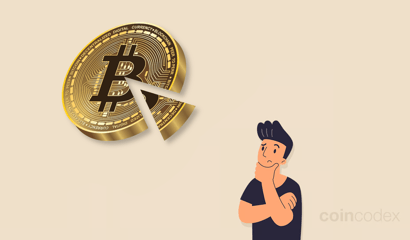
Pull out your digital magnifying glass. It’s time to zoom in on Bitcoin’s tiniest unit: the Satoshi. Every huge movement you see on crypto exchanges? Underneath it all, millions of Satoshis are changing hands. A Satoshi is the smallest fraction of a bitcoin: one bitcoin equals 100,000,000 (one hundred million) Satoshis. Yes, that’s a lot of zeros. But knowing how much a Satoshi is worth in practical terms helps you track value, budget micro-spending, and even spot hidden fees. Let’s cut through the noise. If you want to work with Bitcoin, you need to know the basics, starting with the Satoshi. Most people focus on the “big coin,” but real Bitcoin action happens at the micro level. Satoshis drive every transaction, whether you’re buying coffee or moving thousands in an exchange. Note formatting: If you’re curious about the live exchange value, check a trusted Satoshi to USD converter to see real-time numbers. This knowledge is practical, flexible, and it changes how you actually use Bitcoin, no matter your experience level.The Satoshi didn’t just pop up out of nowhere. And it’s not like it’s derived from the name Bitcoin.It’s named after Bitcoin’s elusive creator, Satoshi Nakamoto. No one knows for sure who Nakamoto is, but the name holds legendary status among crypto fans. Satoshi Nakamoto’s wallet address is still followed by many to see what Bitcoin’s mysterious creator is up to.As the person (or group) who started the entire Bitcoin movement, Nakamoto’s influence reaches all corners of the blockchain. Tying the smallest Bitcoin unit to Satoshi is a reminder that the roots of Bitcoin are still baked into every transaction, down to the last decimal.Why does this matter? For one, it’s history encoded into code. When you trade even a single Satoshi, you’re using a name that links directly back to Bitcoin’s genesis block. The name is more than trivia—it’s a symbol of how grassroots and community-driven cryptocurrency culture really is. 1 Bitcoin equals exactly 100,000,000 Satoshis. Flip that around—a single Satoshi is 0.00000001 BTC. The math isn’t just for flashy numbers. This extreme divisibility is intentional, and it’s one of Bitcoin’s strongest points.Dividing Bitcoin into tiny parts makes microtransactions possible. Want to tip someone a fraction of a cent? Satoshis allow it. Pay for a tiny in-game item or donate a few coins to a cause? Sats are the answer. Bitcoin wouldn’t work in daily life if you couldn’t break it down into units this small. Imagine if you had to use a whole Bitcoin every time you wanted to send or receive some. It would be impossible for the vast majority of people, given Bitcoin’s price. Even dividing it into hundredths (like 1 USD = 100 cents) wouldn’t be feasible—it would still mean the smallest unit of Bitcoin you can send or receive is over $1000 with today’s prices.Let’s recap how many Satoshis are in a Bitcoin:This breakdown matters. Without small units, fast payments, and everyday uses are off the table. Bitcoin’s divisibility isn’t just a technical detail. It’s a practical feature that empowers users everywhere.The value of a Satoshi is always linked to the current price of Bitcoin. Smallest doesn’t mean insignificant—understanding Sats means knowing exactly how Bitcoin fits into your wallet, your everyday spending, and the wider economy. The worth of a Satoshi changes all the time. It makes sense, of course. Satoshis are just tiny slices of a whole Bitcoin, and Bitcoin’s price is known for its wild swings. Whenever Bitcoin’s price against the dollar jumps up or crashes down, the price of one Satoshi instantly changes too.Here’s what causes this:You’ll see numbers that fluctuate with every tick of Bitcoin’s price chart. One day, a Satoshi might be worth a tiny fraction of a cent. Next week, it could be up or down, right in line with whatever is happening to Bitcoin overall. So, how much is a Satoshi worth right now?At the time of writing, a Satoshi is worth 0.001088 USD.You might wonder: Who really moves such tiny units? It turns out, millions of people rely on Sats for all kinds of real-world uses:There’s a practical reason for all this: having a unit as small as the Satoshi means anyone can use Bitcoin, even if they don’t have funds to buy a full Bitcoin, or even 0.01 Bitcoin. This opens up the entire system to more people, including those sending pennies’ worth of value or making regular purchases online.Here’s what makes Sats the backbone of the Bitcoin ecosystem:Bitcoin’s smallest unit makes crypto real for everyone, not just the whales. Crypto’s early promise was quick, cheap payments anywhere, for anything—even a few cents at a time. Turns out, small transactions are harder than they look. High fees, slow networks, and clunky designs have always stood in the way. Satoshis shift that story by letting anyone send minuscule sums.Here’s how the environment has changed:Game developers, social platforms, and media sites are experimenting with cryptocurrency microtransactions to bypass ad-blockers and support creators. Satoshis are the engine here. They let the digital economy run on a price-per-click or pay-as-you-go model, supporting new monetization ideas that simply aren’t possible with traditional money.If Bitcoin is ever going to be “everyday money,” people need to buy a snack, split a bill, or send a friend 5 bucks. That’s not practical with Bitcoin.Here’s where Satoshis step in:Some see Bitcoin not as a daily currency, but as “digital gold”. A long-term store of value and a serious competitor to gold. Even in that model, Satoshis is necessary. They let people accumulate wealth in small chunks and keep the option open for future spending.A Satoshi is the smallest slice of Bitcoin, just one hundred-millionth of a BTC. But it packs way more power than its size suggests. If you know and understand Satoshi, it gives you control over tiny payments and clear tracking of costs. It also opens up Bitcoin to anyone, no whale wallet required.And this isn’t about math, either. Satoshis are your edge for using, earning, and sending Bitcoin in ways that truly fit your life. If you ever thought to yourself “Man, Bitcoin would be so much easier to use in everyday life if it weren’t so expensive,” Satoshis solve that issue.You’ve learned about the smallest unit of Bitcoin, so let’s go to the other extreme – check out our Bitcoin rich list to explore the top BTC holders and addresses.
Published on Other News Site








Recommended
Sodann schlie?t BetsAmigo welches Rangordnung ein Top-2 Verbunden...
02 April, 2026 | 2 readers
Anabolisants et efficacité en combustion des graisses
02 April, 2026 | 2 readers
Immortal Romance Vein out of Silver Stormcraft Studios Banana Spl...
01 April, 2026 | 2 readers
Descubra uma Seleção Antiióàico infantilidade Slot online Pil...
01 April, 2026 | 2 readers
Juguetear Gonzo's Quest Gratuito ¡Explora desplazándolo hacia e...
01 April, 2026 | 2 readers
Trending This Week
Related News
Leverage in the Bitcoin Market Is Increasing Again as $58.5K Becomes Key Level
12 September, 2024| 302 readers
Bitcoin Soars as Gold Dips: The Stellar 12% Surge in BTC/XAU Signals a Market Shift
7 November, 2024| 290 readers
Protocol Village: Nexus Launches 'World's First Open Prover Network' in Beta
10 October, 2024| 289 readers
An Interview With El Salvador’s Top Crypto Regulator: ‘Developing Countries Can Lead the Financial Revolution’
16 November, 2024| 286 readers
'Satoshi Era' Wallets Move $16M in Bitcoin After 15 Years of Dormancy
20 September, 2024| 273 readers
Bitcoin Market Euphoric, Faces Risk of Pullbacks and Leverage Washouts, Trading Firm Warns as BTC Price Nears $90K
12 November, 2024| 270 readers
Crypto Wallet Holding $2B Mt. Gox Bitcoin Sends Test Transaction as Distribution Continues: Arkham
13 August, 2024| 263 readers
Strategic Bitcoin Reserve Has Precedent in Other Big U.S. Government Purchases: Michael Saylor
14 November, 2024| 259 readersRelated Peoples