Exclusive: Droidrun, backed by Silo AI co-founder, snaps €2.1M to unlock AI automation for mobile apps
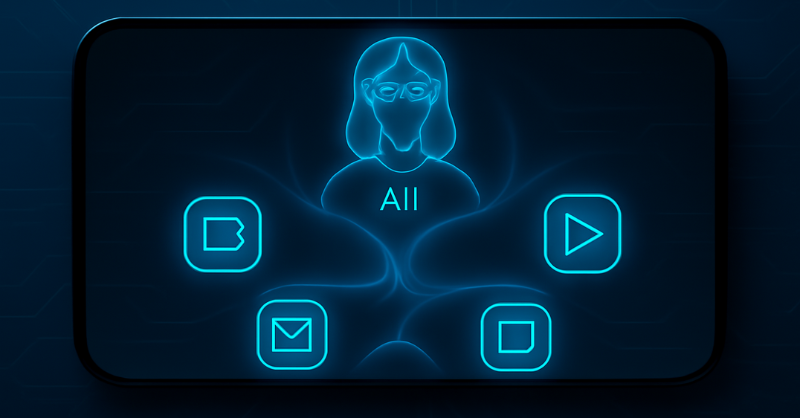
Mobile remains the final untapped frontier for AI automation. While AI agents have transformed workflows on desktops and web browsers, the platform where people spend most of their digital time has stayed inaccessible. This is primarily because mobile apps function as “walled gardens” with limited external access, unlike the web, which has standardised automation interfaces. Droidrun tackles this challenge by creating the first reliable AI agent infrastructure that seamlessly controls Android and iOS devices through natural language commands.
Instead of trying to “see” screens like a human, a slow and error-prone approach, Droidrun converts mobile interfaces into structured text that large language models (LLMs) can process directly.Christian Ninstel, Droidrun’s CEO, describes this as “like creating an API for every mobile app ever built.”
“We’ve raised €2.1 million in pre-seed funding led byMerantix Capital, with participation from SixtyDegree Capital and notable angel investors including Peter Sarlin from Silo AI, recently acquired by AMD, and Felix Jahn, founder of McMakler. The round closed in July 2025,” said Ninstel in an exclusive interview withTFN.
The company quickly validated this market gap after launch. Over 900 developers signed up within 24 hours, and in just 10 weeks, Droidrun garnered more than 3,300 GitHub stars, securing the top spot on the AndroidWorld benchmark. “The viral response proved developers had all been hitting the same mobile automation wall we encountered,” Christian said.
Droidrun was founded by a tight-knit team of four co-founders with a history of successful collaboration. “We’re four co-founders who’ve already built two companies together, which gives us a proven working dynamic,” said Christian.
Christian, launching his third company, focuses on strategy and identifying early market opportunities. Niels Schmidt, Chief Technical Officer, architected the core mobile automation technology. He has deep experience in AI and blockchain, “but more importantly, he builds things that work in production,” Christian noted.
Nikolai Dück, Chief Product Officer, built an AI chatbot platform seven years ago, long before AI entered the mainstream, that Fortune 50 companies still use today.Peter Lächner, who previously worked at Bosch managing international teams, brings crucial expertise in how large enterprises purchase and deploy technology. Before Droidrun, the team built a dominant local loyalty platform in a German city and bonny.network, a blockchain-based consumer data reward platform.
The momentum for Droidrun came from a shared frustration. “We needed AI agents to extract product insights from viral TikTok videos for our previous startup. Sounds simple, but every mobile automation solution failed catastrophically. UiPath, Selenium, academic tools: they’d work in demos but break the moment TikTok updated their interface,” Christian recalled. This pain revealed a fundamental missing piece in the AI automation industry: reliable access to mobile app interfaces.
Traditional AI mobile automation tries to “see” the screen like humans, capturing screenshots, analysing pixels, and estimating button locations. This approach is slow, fragile, and breaks when apps update.
“We flipped it completely. Instead of teaching AI to interpret mobile screens visually, we convert mobile interfaces into structured text that large language models already understand. Rather than hunting pixels, we give AI the actual button data and interface structure,” Christian explained.
This approach delivers three times faster execution, dramatically lower computational costs, and much higher reliability when apps update their UIs. Droidrun’s solution earned the #1 rating on the AndroidWorld benchmark and, crucially, works in production environments where vision-based solutions fail.
Droidrun combines visual understanding with UI structure extraction, enabling reliable control of mobile apps on Android and iOS. Its open-source framework has attracted rapid community adoption, with over 900 developers in 24 hours and more than 3,300 GitHub stars in under three months, making it the fastest-growing mobile AI agent project.
Looking ahead, Droidrun is accelerating the development of its cloud platform, enabling enterprises to deploy mobile AI agents at scale while maintaining the open-source framework that fuels developer innovation.
Christian outlined the vision for the coming years: “Within a few years, automated workflows will outnumber human interactions on mobile devices. Instead of switching between a dozen apps to book a business trip, checking flights on one, hotels on another, and expenses in a third, you’ll simply tell your AI agent, ‘Book my trip to Berlin next week for the client meeting.’ The agent will handle it all automatically.”
This future promises a profound transformation. “Instead of static app icons and manual navigation, we’ll have agentic user interfaces that adapt and respond intelligently, or entirely new operating systems designed around AI agents rather than human touch.”
He stressed the essential role of infrastructure: “For this transformation to happen, agents need seamless access to mobile systems to bridge human intent with digital action. Droidrun is building the infrastructure that makes this revolution possible.”
Early adopters are using Droidrun to unlock data from mobile-only platforms, automate critical business workflows, extend robotic process automation (RPA) to mobile devices, support QA automation, and build AI agents that require mobile execution.

Published on Other News Site








Recommended
Sodann schlie?t BetsAmigo welches Rangordnung ein Top-2 Verbunden...
02 April, 2026 | 2 readers
Anabolisants et efficacité en combustion des graisses
02 April, 2026 | 2 readers
Immortal Romance Vein out of Silver Stormcraft Studios Banana Spl...
01 April, 2026 | 2 readers
Descubra uma Seleção Antiióàico infantilidade Slot online Pil...
01 April, 2026 | 2 readers
Juguetear Gonzo's Quest Gratuito ¡Explora desplazándolo hacia e...
01 April, 2026 | 2 readers
Trending This Week
Related News

12 Best Meme Coins to Buy in May 2024
8 May, 2024| 424 readers
New AI Model Developed by Harvard Detects Cancer With 96% Accuracy
21 October, 2024| 333 readers
Donald Trump Eyes AI Czar In Joint Vision for Artificial Intelligence and Crypto Leadership
27 November, 2024| 326 readers
How to Use Unstable Diffusion? (Ultimate Guide 2024)
1 August, 2024| 324 readers
Nvidia vs Huawei: New AI Chip Showdown to Cost Nvidia Billions
23 April, 2025| 319 readers
Cannes Lions: Creators Talk AI and Metaverse at International Festival of Creativity
28 June, 2024| 291 readers
10 Best Nancy Pelosi Stocks to Buy in 2024: Examining Former House Speaker’s Stock Portfolio
9 May, 2024| 289 readers
Family Offices Investors Summit: The $100M Club Bets on Liquid Token, AI, and Gaming in Pivot to Alternative Investments
19 September, 2024| 265 readersRelated Peoples